
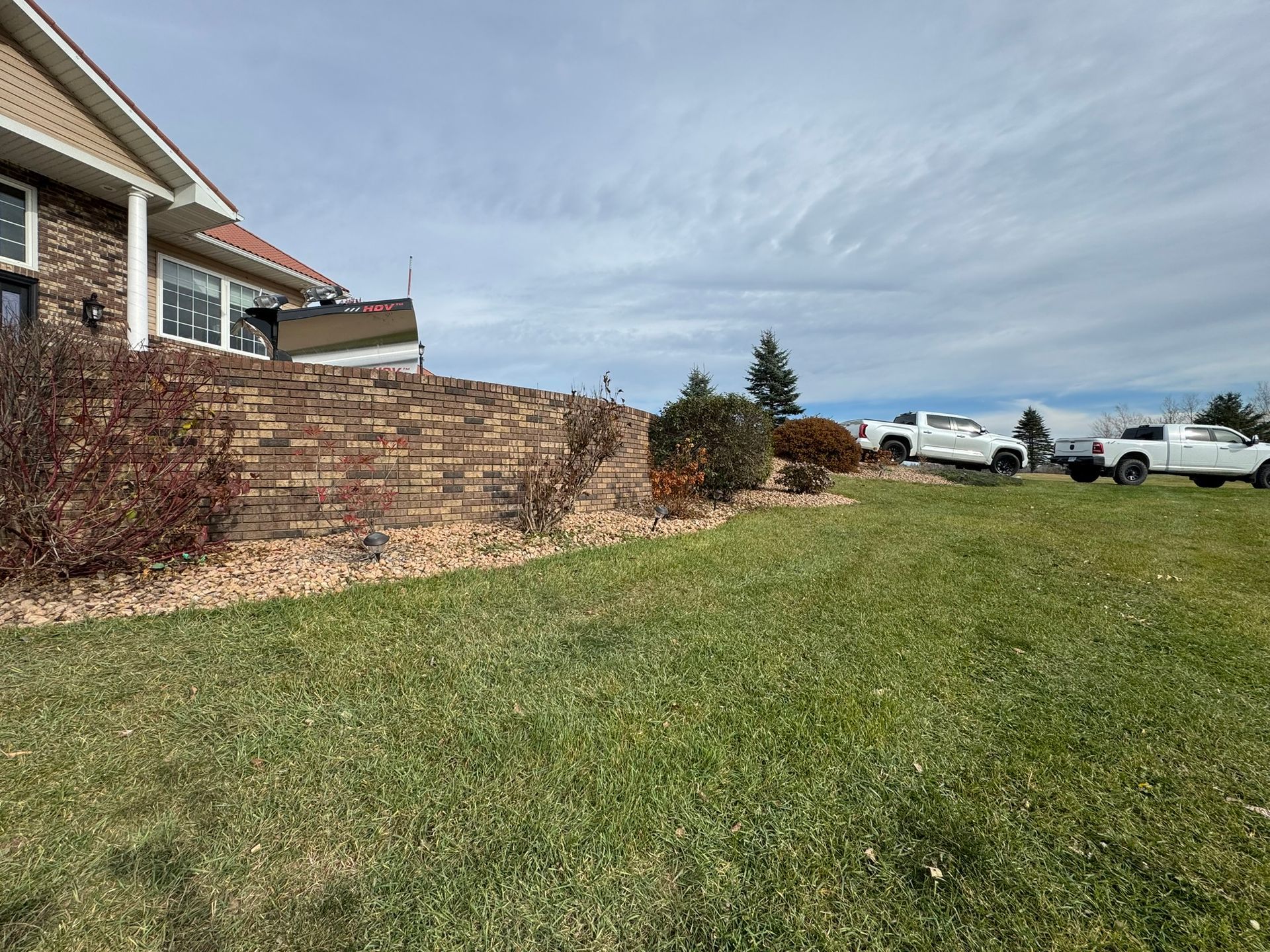
Walls That Hold Soil Where It Belongs
Retaining Walls & Hardscaping in Duluth for sloped yards, erosion along driveways, or landscape areas that wash out during heavy rain
Diamond Willow Services builds retaining walls and hardscape structures for homeowners dealing with slopes, erosion, or soil movement that affects yard usability and drainage. You may notice soil sliding downhill after storms, exposed tree roots on hillsides, or uneven ground that makes mowing and planting difficult. This service stabilizes slopes, holds soil in place, and creates level terraces that expand usable outdoor space.
Retaining wall construction begins with excavation along the slope and preparation of a stable footing. Stone, block, or masonry units are stacked and locked into position, with drainage material placed behind the wall to prevent water pressure from building up. In Duluth, where soil freezes and expands, proper drainage is essential to prevent walls from shifting or cracking. The finished wall holds back soil, redirects water runoff, and creates defined planting beds or level areas for patios and walkways.
If your yard has slopes that erode or areas where water moves soil away from foundations or driveways, reach out to discuss how retaining walls can stabilize those sections and improve drainage.
How Retaining Walls Change a Sloped Property
After a retaining wall is built, you will see soil held in place instead of washing downhill. Slopes are transformed into level terraces that can support plantings, lawns, or hardscape features. Water drains behind and through the wall rather than pooling at the base or eroding soil along the face. The structure remains stable through freeze-thaw cycles because it is built with proper footing depth, backfill drainage, and material weight that resists ground movement.
Diamond Willow Services designs retaining walls to fit the slope, soil type, and surrounding landscape. Walls can be built in single tiers or stacked terraces depending on the height and angle of the slope. Stone and block materials are selected for durability and appearance, and the wall integrates with existing landscaping, driveways, or walkways. Hardscape features such as stone borders, planters, and steps can be added to define outdoor areas and improve access across elevation changes.
The wall is engineered to handle soil pressure and water flow without leaning or cracking. Drainage stone is placed behind the wall, and weep holes or perforated pipe allows water to exit without building up hydrostatic pressure. If your property includes steep grades, the wall can be positioned to protect driveways, foundations, or garden beds from runoff and soil movement. This is structural work that prevents ongoing erosion and makes sloped land usable.
Questions Homeowners Ask About Retaining Walls
Retaining walls involve design and material decisions that affect long-term performance. These are questions that come up during site evaluations.
How tall can a retaining wall be before it needs engineering?
Walls over four feet typically require engineering and permits, though local codes in Duluth may vary depending on the site and wall type.
Why do some retaining walls lean or crack?
Leaning usually results from poor drainage, inadequate footing depth, or lack of backfill material that allows water pressure to push against the wall.
What material works best for retaining walls in cold climates?
Stone, concrete block, and modular wall systems all perform well in freeze-thaw conditions when installed with proper drainage and base preparation.
How does water get through a retaining wall?
Drainage stone behind the wall allows water to flow downward and exit through weep holes or perforated pipe at the base, preventing pressure buildup.
When should a retaining wall be built instead of regrading a slope?
Retaining walls are used when space is limited, when regrading would affect structures or landscaping, or when creating level terraces is more practical than managing a continuous slope.
If your property has slopes that erode, soil that moves, or drainage problems along hillsides, contact Diamond Willow Services to review the site and discuss retaining wall options that fit your landscape and long-term goals.